Get Food
Donate Now
Sign up for our
Email Newsletter

Translate this site
English flagSpanish flag
Non-Discrimination Policies

Federal Policy Updates

Check out Feeding America’s advocacy center for information about current federal legislation related to hunger and nutrition.

Current information about national legislation is also available from the Food Research & Action Center (FRAC).

Charity Can’t Do It Alone

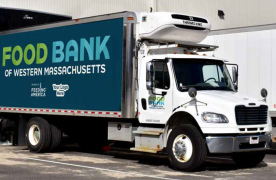
The generosity and dedication of donors and volunteers go a long way in helping charities across the countries achieve their goals. The Food Bank of Western Massachusetts has a service area of more than 2,800 square miles and serves more that 135,000 food insecure individuals. It is with emergency food assistance programs like TEFAP (The Emergency Food Assistance Program) and SNAP (Supplemental Nutrition Assistance Program) that allow donated funds to go farther and volunteer work to distribute more food to areas that need it the most.

TEFAP and SNAP:

Commodity foods supplied via The Emergency Food Assistance Program (TEFAP), which is administered by the USDA, accounts for almost fifteen percent of the food The Food Bank of Western Massachusetts distributes. These nutritious USDA foods are a key reason that The Food Bank has been able to feed more people during the recession and its aftermath. Over the past year, we’ve already seen a reduction in about one million pounds of food received through TEFAP. Further cuts would be devastating.

Also at risk is the Supplemental Nutrition Assistance Program (SNAP, formerly food stamps). In 2011 SNAP lifted 3.9 million people out of poverty, improves dietary quality and health, and it is an efficient program with low overhead; 95 percent of funds go directly to recipients. Besides being an effective tool in preventing hunger, SNAP is also an economic stimulus. For every $1 in SNAP benefits, $1.74 is generated in economic activity. Currently, 166,000 residents of Western Massachusetts rely on this program. Cuts would mean an already stretched local emergency food network, lead by The Food Bank, would face a huge uptick in need. Learn more about SNAP here.

Please contact your U.S. Senators and Representative to urge them to protect TEFAP and SNAP so that people in need across our Commonwealth can have enough food to eat. You can look up your U.S. Representative and Senators at www.wheredoivotema.com. You also can reach them through the U.S. Capitol Switchboard at 202.224.3121.

Thank U.S. Congressmen Jim McGovern (D-MA) and Richard Neal for signing a letter asking their colleagues to support our nation’s food pantries and urge the Appropriations Subcommittee on Agriculture to provide the funding levels mandated by the 2008 Farm Bill in Fiscal Year 2014.

Tell them that you are a constituent and provide them with the name of the town in which you live.

Here are some talking points:

  • Please support programs such as The Emergency Food Assistance Program (TEFAP) that provide food assistance to hungry Americans. Please vote against any cuts to this program and please work to restore these funds. Cutting safety-net programs like TEFAP is not the way to balance the budget. Instead, I ask that you work with your colleagues to address the deficit while safeguarding programs that protect our nation’s most vulnerable citizens.
  • The number of families struggling to make ends meet increased by 23 percent in the Commonwealth during the recession. With unemployment still high and the cost of food rising, the need for food assistance continues to grow. The proposed 20% reduction to TEFAP would result in 1.3 million fewer meals available to people in eastern Massachusetts alone. We need your help to protect this critical program that helps feed millions of Americans each year.
  • (Thank the person for taking your call.)

The Farm Bill

On January 1, Congress passed an agreement to avert the “Fiscal Cliff” and prevent tax rates from rising on 98% of Americans.  As part of the deal, the automatic spending cuts (sequestration) that were scheduled to go into effect on January 1 have been postponed for two months.  The measure also included an extension of the Farm Bill until September 30 and renewed the Food Donation Tax Deduction through 2013.  Below is a breakdown of how the Fiscal Cliff agreement impacts the network and the clients we serve.

What’s Next? 

Below is a list of dates for important milestones in the federal budget process and how they will impact SNAP and TEFAP programs moving forward. For more visit FRAC’s website:

  • April 15 – Deadline for Congress to pass a budget.
  • September 30 – Farm Bill extension expires.
  • October 1 – FY2014 starts.
  • November 1 – SNAP benefits decrease by $10 to $15 a month per person, as the result of the cuts made to the program in 2010.


We urge you to sign up for regular advocacy alerts to stay informed about how decisions like these ones will affect those facing hunger in our community, and what you can do to influence your legislators.

Print Friendly