Can individuals come pick-up food directly from the Food Bank in Chicopee?
No, our direct food services are not available at our office and warehouse in Chicopee. This is because a Food Bank’s primary purpose is to handle food in bulk, requiring tightly controlled storage methods and industrial equipment that is not safe to be around without proper training. Our two distribution programs for households facing food insecurity (Mobile Food Bank and Brown Bags: Food for Elders) are therefore hosted outside of our facility, at accessible locations across the four–county region.
For a full list of our many partner food pantries, meal sites, and shelters where you can visit to pick up food, visit our service map >
What is the difference between the Food Bank and a food pantry?
The Food Bank is a regional organization that provides food to nearly every food pantry, shelter, meal site, and many other food assistance sites in Western Massachusetts. We are also the authorized distributor of food available through government programs like the US Department of Agriculture (USDA), The Emergency Food Assistance Program (TEFAP) and the Massachusetts Emergency Food Assistance Program (MEFAP). Unlike local food pantries and other feeding programs, the Food Bank does not distribute food directly to individuals (except through our Mobile Food Bank and Brown Bag: Food for Elders programs). Instead, we act as a regional clearinghouse to get nutritious food to local sites that help people in need of assistance.
Where is the Food Bank located and what area does it serve?
The Food Bank operated for a long time out of a facility in Hatfield, and has since moved to a new location in Chicopee. Our service area includes Berkshire, Franklin, Hampden, and Hampshire Counties. We serve the largest geographic area of any food bank in Massachusetts.
Why do people need food assistance?
Many people seek emergency food to get them through a short-term crisis: a layoff, a critical illness, or loss of home due to fire. Others are unemployed and hungry with no way to buy food. An increasing number are seeking food to fill in gaps their paychecks aren’t covering. Many hard-working families are living from week to week, just on the edge of emergency.
What is food insecurity?
Food insecurity is defined by the U.S. Department of Agriculture in two categories: food insecurity with hunger and without hunger. Food insecurity with hunger is the experience of disrupted eating patterns and reduced food intake. Food insecurity without hunger is defined by reduced quality, variety, and desirability of diet. Households that experience marginal food security may have anxiety over insufficient access to food or food shortages.
How can I help?
Donate — You can make a financial contribution of any amount. Your donation makes a big difference to our ability to get food to people who need it most. Thanks to the size and efficiency of the Food Bank, each dollar donated allows us to provide 4 meals to our neighbors in need.
Participate — The Food Bank holds a number of fundraising activities throughout the year that contribute to our ability to purchase more food. In addition, community organizations throughout the region hold special food and fund drives for the Food Bank. Your participation will help provide additional resources for us to help feed our neighbors in need.
Advocate — The Food Bank believes that it is possible to end hunger, but it will take a significant amount of political will to change the factors in our current system that put people at risk of hunger and poverty. Advocate against hunger by contacting your government representatives or getting involved in our efforts to support specific anti-hunger legislation.
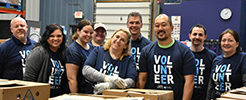
Volunteer — Volunteers are critical to our ability to ensure that our neighbors have the food they need. The Food Bank has a number of opportunities available for you to support our work. Whether it’s sorting donated food in our warehouse, assisting at a Brown Bag distribution site, helping people apply for SNAP benefits, or helping at a fundraising event, your time and talents will contribute to the success of our organization.
If you are interested in learning more about hunger in our communities, a member of our staff would be happy to speak to your employees, civic group, or congregation, or provide a tour of our facility. Call us with your ideas and suggestions for other ways you want to get involved!
Annual Report FY22
Thank you to all of our donors who continue to support our mission.